The Trap Zeus Set for Himself
When Alcmene was about to give birth to Hercules, Zeus made an announcement to the assembled gods: the next hero of the line of Perseus to be born that day would rule all the Perseids. It was a promise made in pride. The kind of oath gods swear without reading the fine print. Hera saw the opening immediately. She delayed Alcmene's labor and hurried along a premature birth in another woman of Perseus's line—Nicippe, wife of Sthenelus. The child born first that day was Eurystheus.
Hercules was born second. The prophecy transferred. Eurystheus, a mediocre man with no particular gifts, found himself with divine authority over the greatest hero who would ever live. Zeus was furious when he understood what had happened, but the oath was sworn and could not be undone. Even the king of the gods cannot retract a divine promise—not even his own.
The Man Who Hid in a Jar
Eurystheus was, by all ancient accounts, a coward. He was afraid of Hercules—afraid with the specific fear of someone who has authority over a man who could kill him with one hand (and knows it). When Hercules returned from the first labor with the Nemean Lion's skin over his shoulders, Eurystheus was reportedly so terrified that he hid inside a large bronze jar buried in the earth. He communicated with Hercules thereafter through a herald named Copreus—a name meaning something close to ‘dung man,' which is the ancient texts' way of editorialising.
The labors Eurystheus assigned were designed to be impossible. When Hercules succeeded at each one, Eurystheus found reasons to disqualify them. The Hydra didn't count because Iolaus helped. The stables didn't count because Augeas had offered payment. The pattern is a recognisable one: a person with bureaucratic authority over someone far more capable, using rules to frustrate what the rules were never designed to prevent.
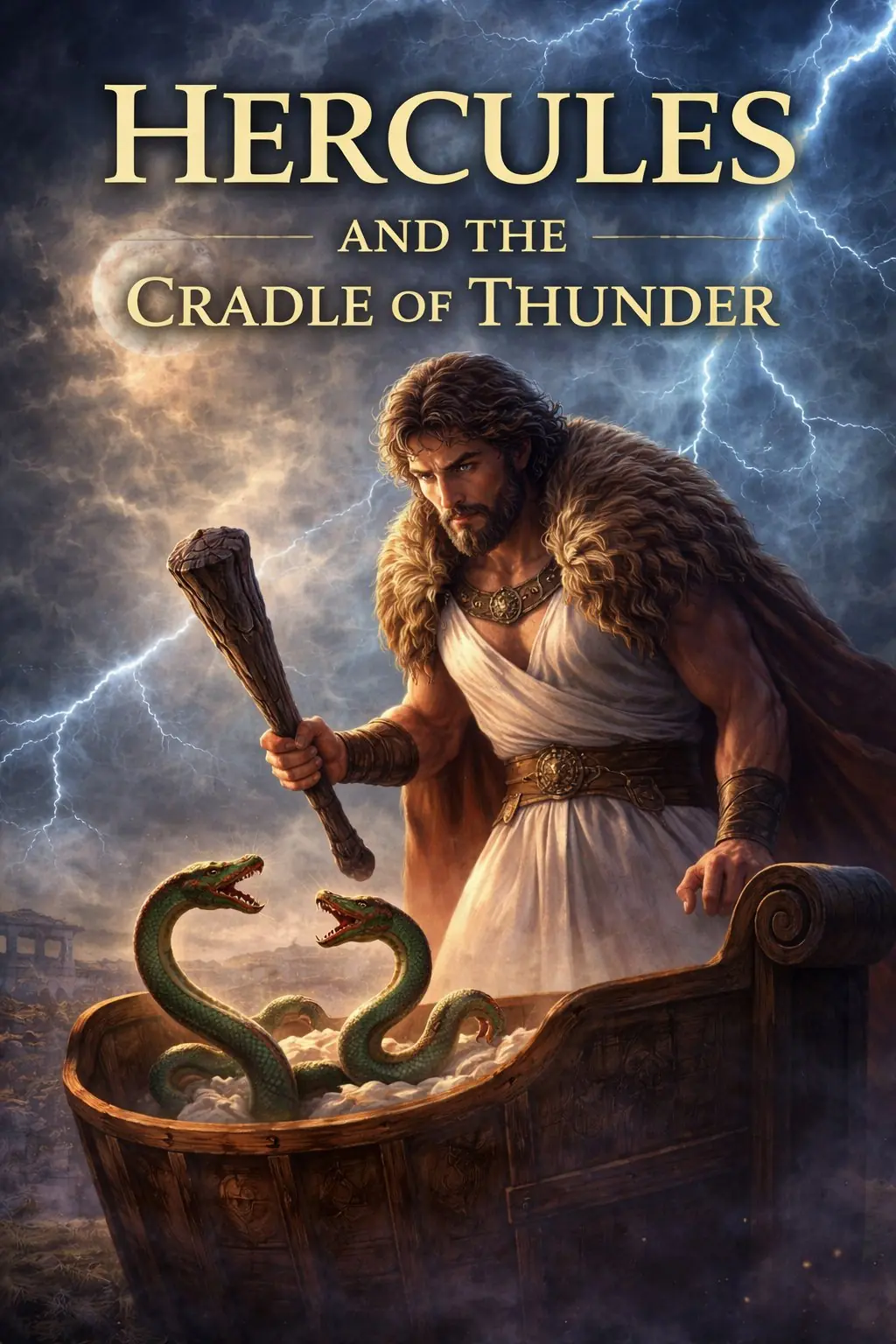 The labours as they actually happen — bare-handed, up close, human. That’s my novel Hercules and the Cradle of Thunder. Read it on Amazon →
Why the Coward Is Necessary to the Myth
The labors require a legitimate demand. A Hercules who kills the Nemean Lion because he feels like it is a strongman story. A Hercules who drags the skin back to a man hiding in a jar is something else. That man has the right to send him. What makes the labors what they are is that he has to do them because he was told to, by someone with divine authority to tell him, regardless of whether that person deserves the authority.
The myth places its hero in a condition of legally sanctioned servitude to a lesser man and then watches what he does. What he does is comply, perform, succeed, and endure—twelve times, without the comfort of serving someone worthy of being served. Eurystheus is necessary not despite his weakness but because of it. Somewhere outside Mycenae, in every telling, there is still a bronze jar sunk into the ground. That is where the myth actually keeps its king: underground, listening through a herald named ‘dung man.' The strongest man who will ever live keeps coming back to ask what's next.
Hercules and the Cradle of Thunder
Book Two of the Myths of the Ancient World series. The twelve labors of Hercules—what each one actually required, and what it cost.
Also on the blog: