The Scale of the Problem
King Augeas of Elis had the largest cattle herd in the world—three thousand animals, given to him by his father Helios, the sun god. The stables had not been cleaned in thirty years. The accumulated dung was, by any reckoning, a landscape feature rather than a sanitation problem.
Eurystheus assigned this as a labor with a specific intent: it was designed to be degrading. Having Hercules shovel cattle dung was not a test of heroism or ingenuity—it was a way to humiliate the man who had killed the Nemean Lion and the Hydra by giving him work that any servant could theoretically do, if the scale were not impossible. Eurystheus wanted Hercules filthy and diminished. The labor was contempt made into an assignment.
The Engineering Solution
Hercules went to Augeas before beginning and negotiated a fee: one tenth of the cattle herd if the stables were cleaned in a single day. Augeas agreed, confident the task was impossible (kings are always confident right before a river proves them wrong). Hercules then diverted two rivers—the Alpheus and the Peneus—breaking holes in the stable walls and directing the flow through the complex. The accumulated dung of thirty years was washed away by the combined force of two rivers before nightfall.
The solution has a particular elegance: Hercules solved the labor not with his strength in the conventional sense but with his understanding of hydraulics. The work was not shoveling. The work was civil engineering. He finished in a day.
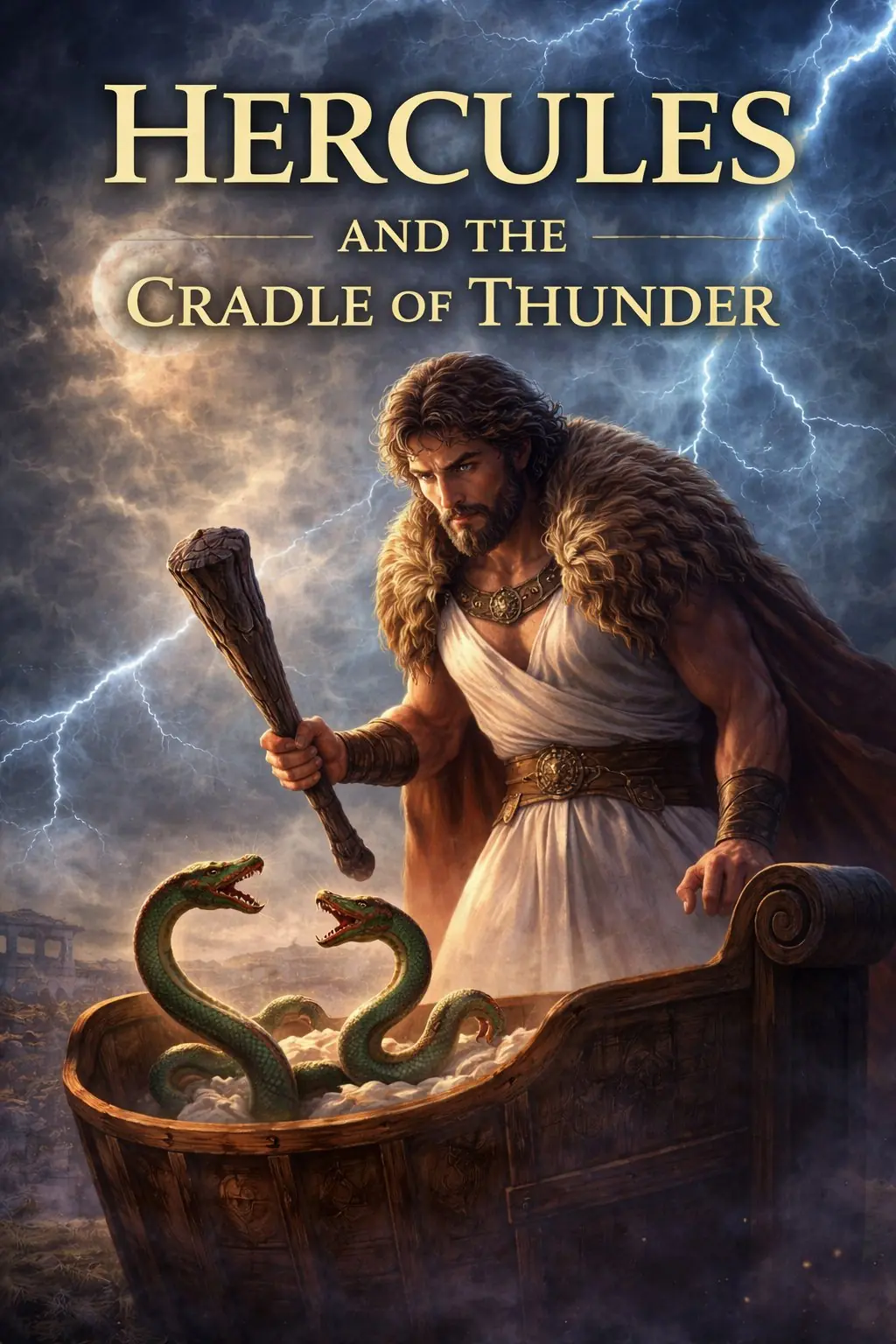 The labours as they actually happen — bare-handed, up close, human. That’s my novel Hercules and the Cradle of Thunder. Read it on Amazon →
Why Eurystheus Refused to Count It
Augeas refused to pay when he learned that the labor had been assigned by Eurystheus (a technicality he discovered suspiciously fast)—arguing that Hercules had been under divine obligation and therefore the negotiated fee was void. Hercules sued him; the claim was eventually upheld, but Augeas expelled his son Phyleus (who had testified on Hercules's behalf) from the kingdom.
Eurystheus, for his part (never a man to let a completed labor go unpunished), disqualified it anyway. The reasons: Hercules had been paid (even though he was not actually paid), and had not done the work with his hands. The technical objections were real; their application was not. Eurystheus voided any labor that succeeded too cleanly—call it a professional habit. The pattern held: succeed, and he would find a reason the success didn't count. That habit is why the canonical twelve labors required Hercules to complete fourteen.
Hercules and the Cradle of Thunder
Book Two of the Myths of the Ancient World series. The twelve labors of Hercules, told in full.
Also on the blog: