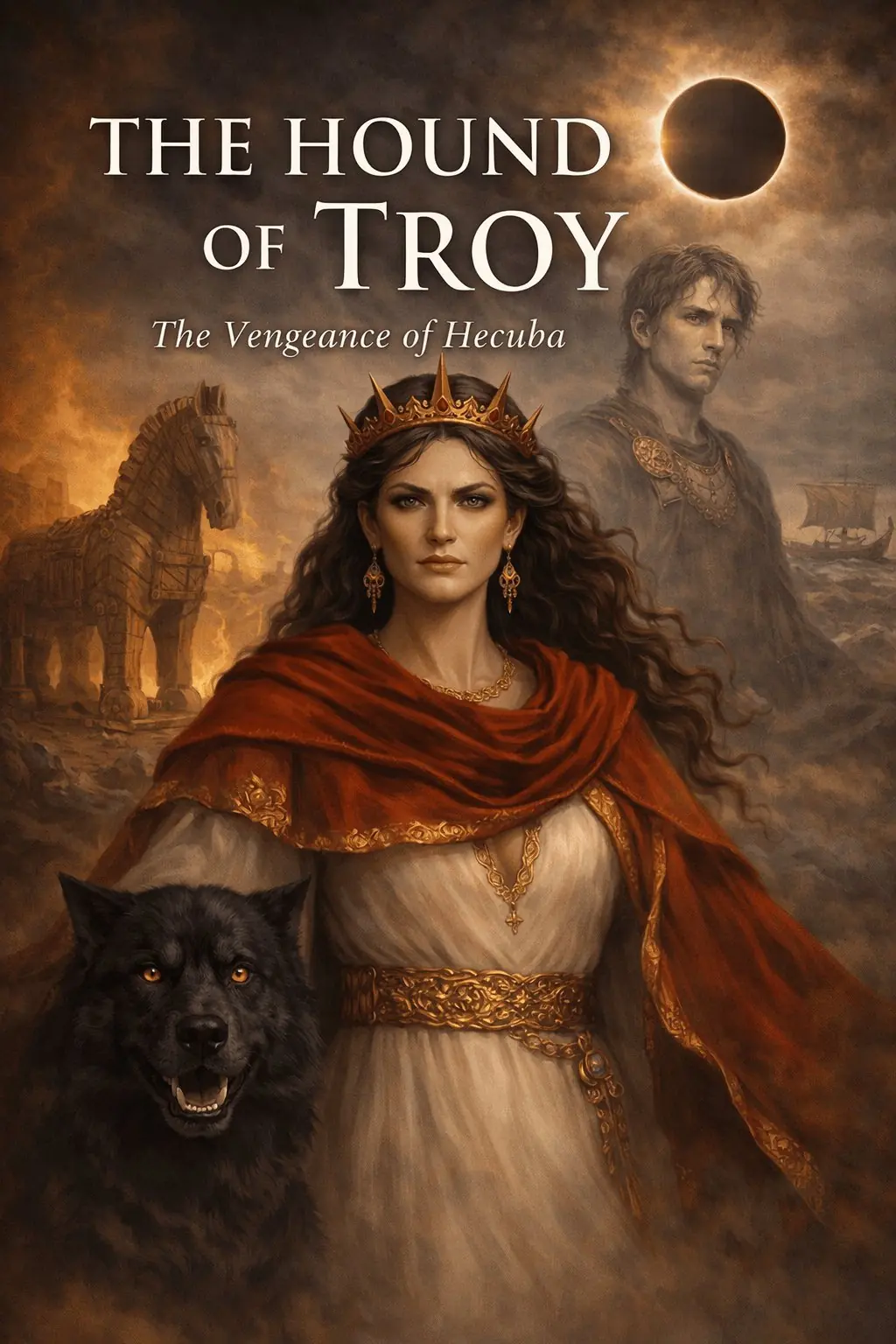
The Hound of Troy
The Vengeance of Hecuba
Hecuba was fifty-two years old, Queen of Troy, mother of nineteen children, and the most competent person in any room she entered. She had run a palace for decades with the precision of a military command — which it was, the narrator notes, in every practical respect. Then the war ended, and everything she had built, and everyone she had loved, was taken from her in the space of a single night.
What the myth remembers is what came after: the discovery of her youngest son Polydorus on a Thracian shore, fourteen years old, wearing a blue tunic, his face turned toward the sea. The vengeance in the tent, accomplished not with weapons but with the gold brooches from her Phrygian mother's jewellery, and a clarity of purpose that Euripides found both horrifying and entirely understandable. The blinding of Polymestor, King of Thrace, who had killed Polydorus for gold. And the transformation on the headland at Cynossema — the place the sailors would call the Dog's Tomb for centuries after, without knowing why.
The Hound of Troy: The Vengeance of Hecuba is the account of how a woman who had never shown emotion in public — who had folded every grief into the dark archive she kept somewhere inside herself — arrived at the point where there was nothing left to fold. Drawing on Euripides' Hecuba and The Trojan Women and Homer's Iliad, it is told in the voice that carries the series: present, opinionated, and constitutionally unable to let a legend pass without noting the gap between the story as it was told and the story as it probably was.
"From supreme queen to slave. They took everything, so she took their eyes."