Greek Mythology Series
The Complete Series
Twelve books. Twelve myths reclaimed from the poets who told them first — the Trojan War, the fall of Thebes, and the journeys in between. Two titles also available in Spanish. Available now on Kindle — free with Kindle Unlimited.
Faithful to the sources. Every book here is retold directly from Homer, the Attic tragedians, Apollodorus, Quintus of Smyrna, and Ovid — never summarized, never modernized past recognition. Every one closes with an Author's Note naming exactly which ancient texts it drew from, which competing traditions existed, and which choices were the author's own. When a myth has more than one ending, the book says so. Readers who want to check the working are welcome to.
The register. These are adult literary novels a parent can hand to a teenager without a second thought. Violence lands the way it does in Greek tragedy — offstage, carried by grief and consequence, never staged for spectacle. Nothing graphic happens to children on the page, ever. Romance stays at longing and implication. No modern profanity. Most books sit at 13+ to 16+; read gently, the whole series works as crossover YA.
The voice. One witty, digressive narrator who has had three thousand years to think about these stories, and is not shy about it.
The psychology. Every book closes with a Jungian "Psychology of the Hero" afterword — the series signature.
Standalone. Every book stands alone. Start anywhere. There is no reading order.
The Trojan War Cycle
Six books
Trojan War Cycle
Literary Mythology
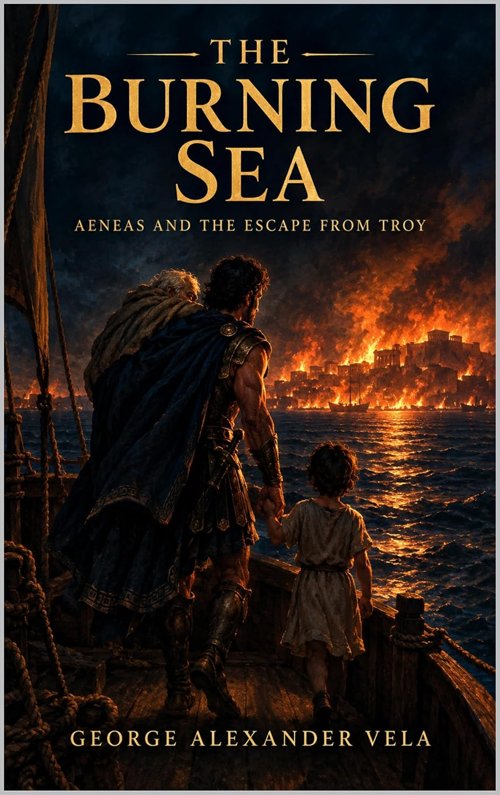
The Burning Sea
Aeneas and the Escape from Troy
The Greeks came out of the horse at midnight. By dawn Troy was a fire, and one man was walking out of it with his father on his back and his small son by the hand.
Aeneas is not the greatest of the Trojan princes, only the one the gods decided should survive. He loses his wife in the burning streets and meets her ghost before he reaches the gate. He builds a fleet from a dead city, is chased off one shore by harpies and wrecked on another by a storm, and washes up at Carthage — where a queen who has already buried one husband decides she will not bury her heart with him.
The Burning Sea follows Virgil's story from the belly of the horse to the coast of Italy: Dido's cave and Dido's pyre, the funeral games in Sicily, the descent to the underworld where his father shows him the city he will never live to see. It is the rare epic whose hero is defined not by what he wins but by what he is made to leave behind — and by carrying the seed of one city out of the ruins of another.
Trojan War Cycle
Literary Mythology
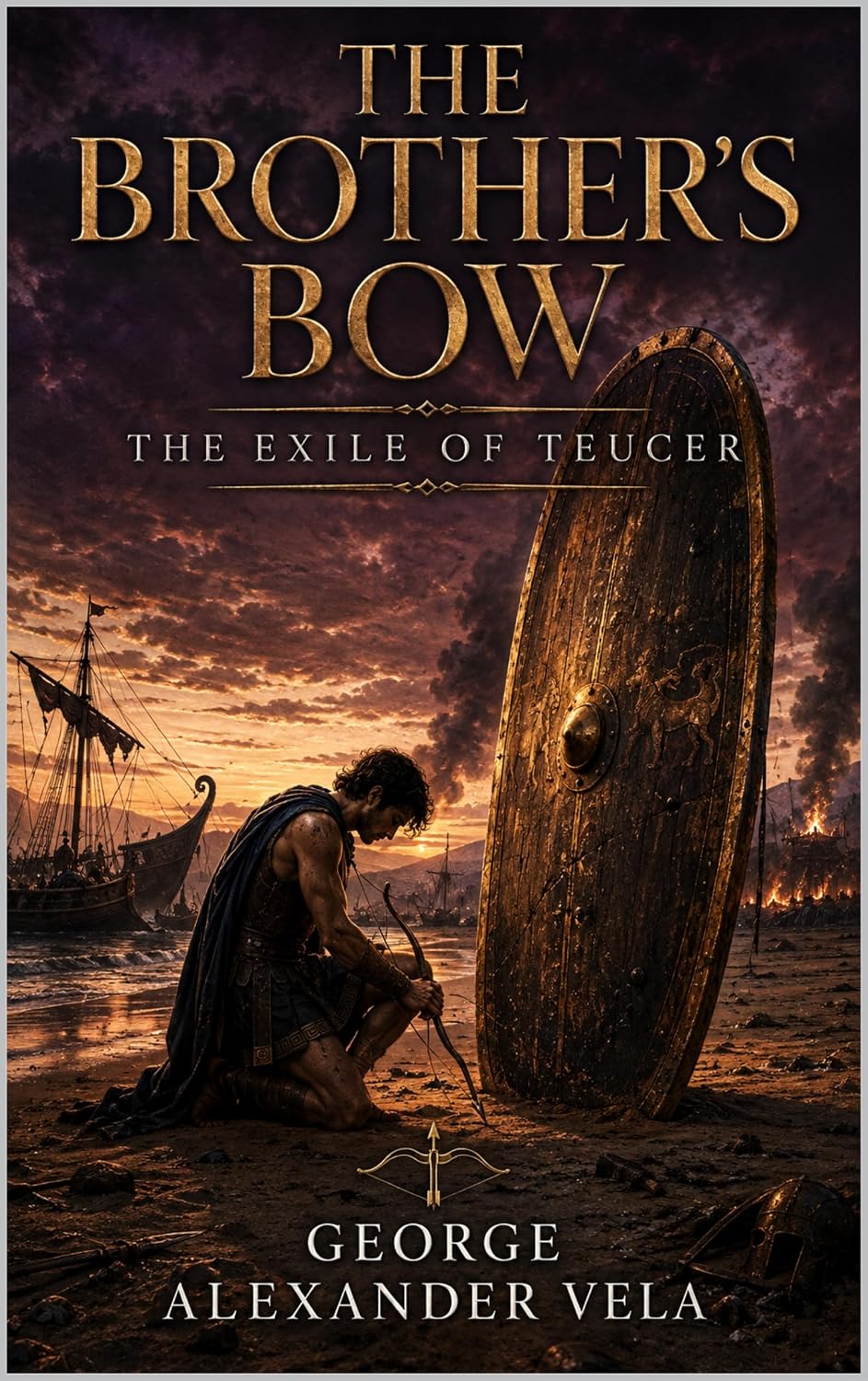
The Brother's Bow
The Exile of Teucer
The greatest archer at Troy never fought a single battle in the open. He fought all of them from behind his brother's shield.
Teucer is the half-blood son — half-Trojan, half-welcome, wholly devoted to Ajax, the giant whose tower shield is the only wall he has ever needed. Together they are one weapon: the strongest man in the army and the deadliest bow, twinned since boyhood on Salamis.
Then Achilles falls, the dead man's armour goes to the wrong man by a rigged vote, and Ajax — cheated, humiliated, and abandoned by the gods — turns his sword on himself. What follows is the part the war songs skip: a brother left holding a body the army would rather forget, a burial the kings forbid, a defence spoken over a grave, and a homecoming to Salamis where an old king waits with one question — why are you alive, and my true son not?
Trojan War Cycle
Literary Mythology
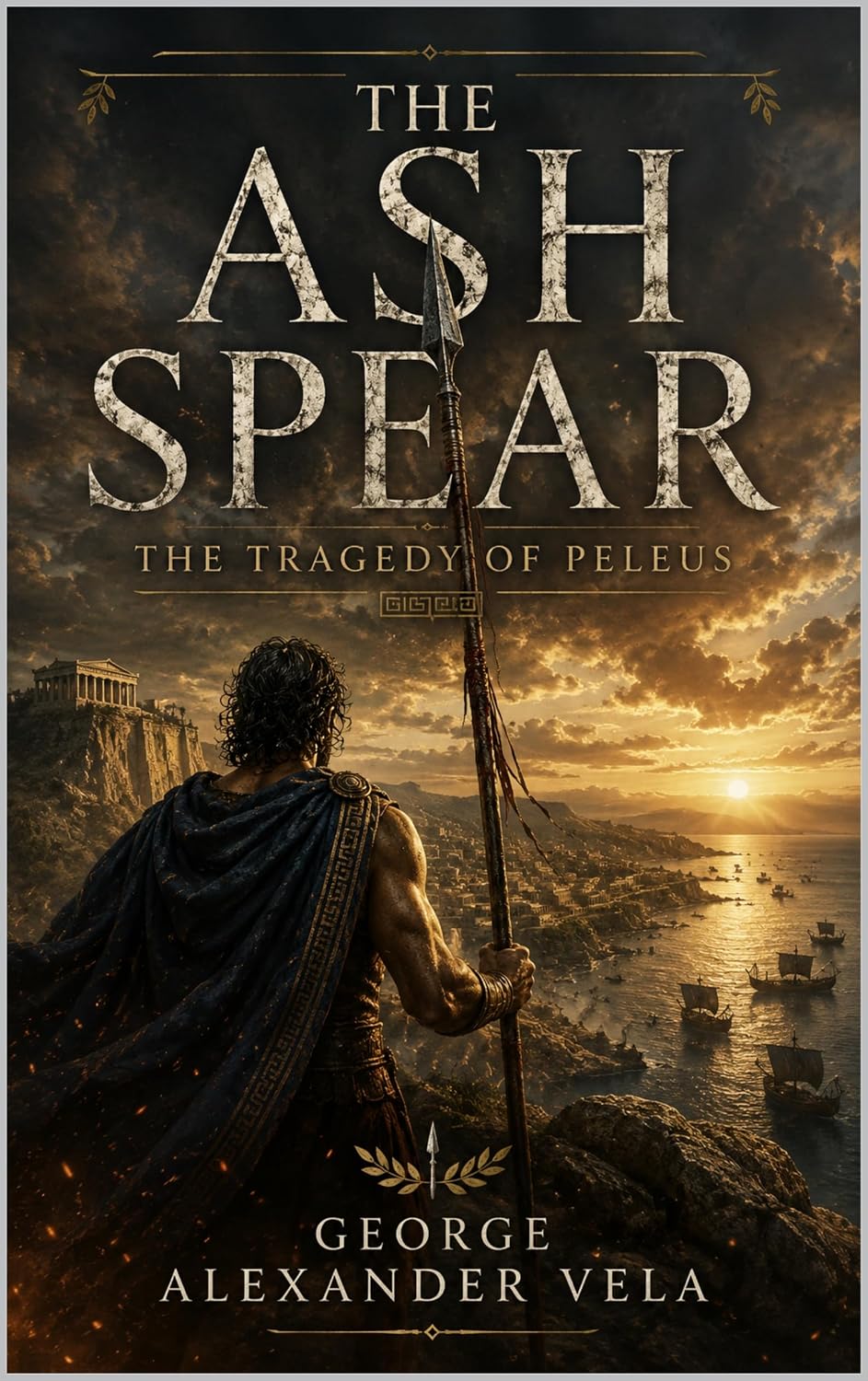
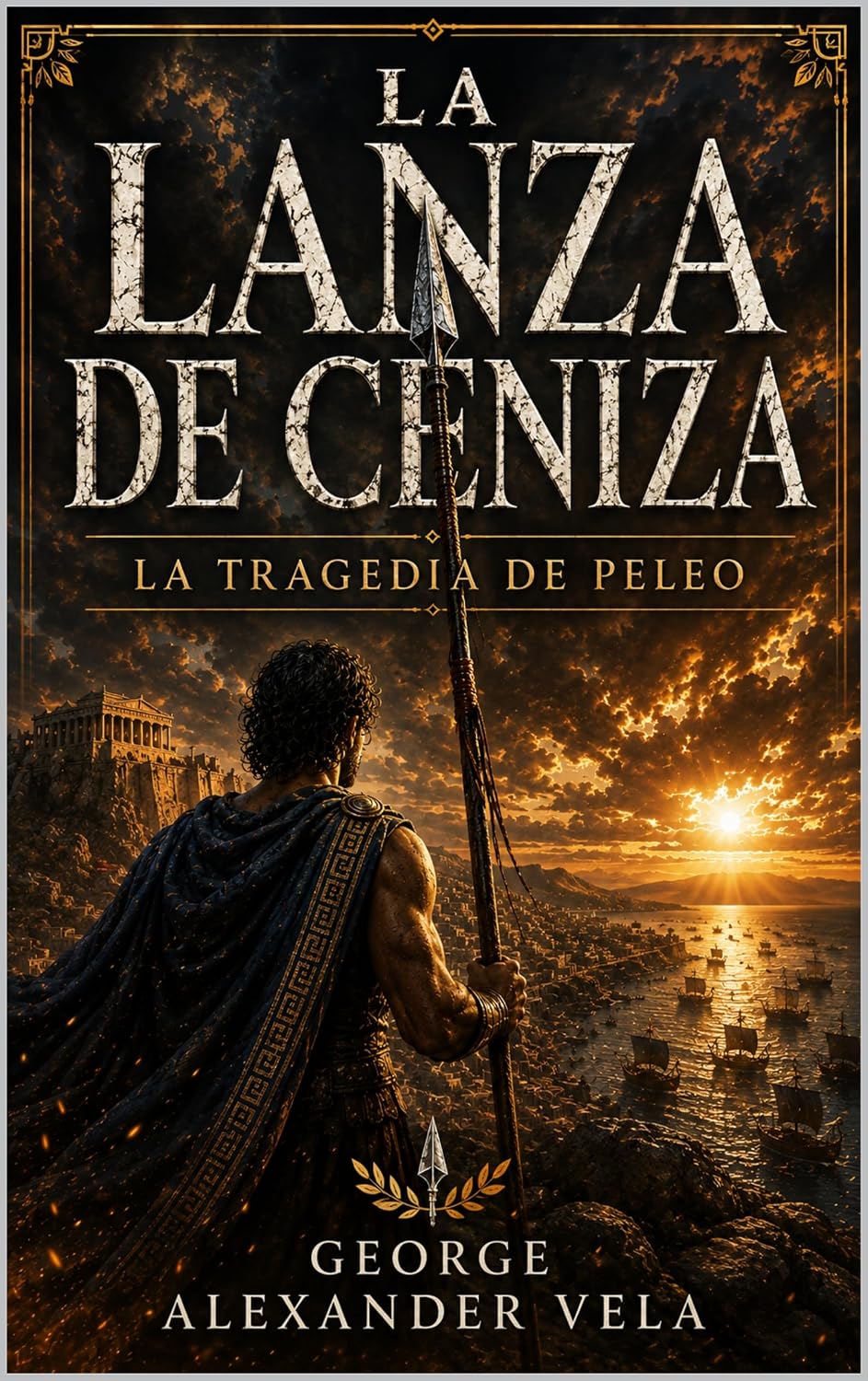
The Ash Spear
The Tragedy of Peleus
Before Achilles, there was his father — and the gods only ruined one of them on purpose.
Peleus of Aegina kills his half-brother with a single unlucky throw of a discus, and spends the rest of his life paying for one moment he cannot take back. Exiled, purified, exiled again — he sails with the Argonauts, survives the great boar hunt of Calydon, and is framed for a crime he did not commit by a queen whose love he refused.
Then the gods hand him a reward no mortal has ever been given: a goddess for a wife. He must wrestle the sea itself to win her — fire, serpent, storm — and on his wedding day one uninvited guest rolls a golden apple across the floor, and the world begins its long slide toward Troy. What follows is a marriage no myth ever called happy: six sons lost to a secret ritual, a seventh saved at the cost of everything, a spear cut from the summit of Pelion, and a father who outlives the greatest warrior who ever lived, waiting on a shoreline for ashes that come home without him.
Trojan War Cycle
Literary Mythology
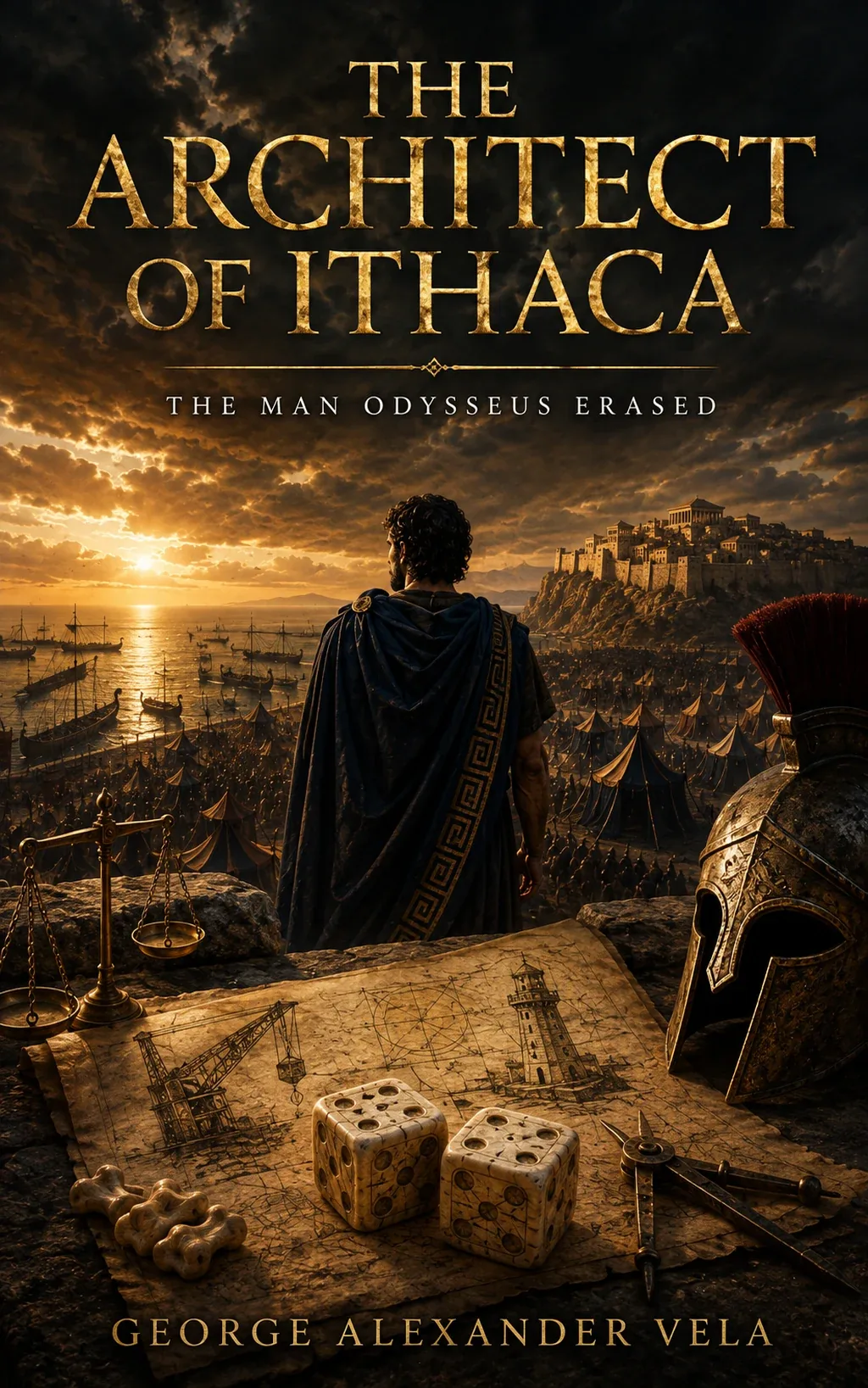
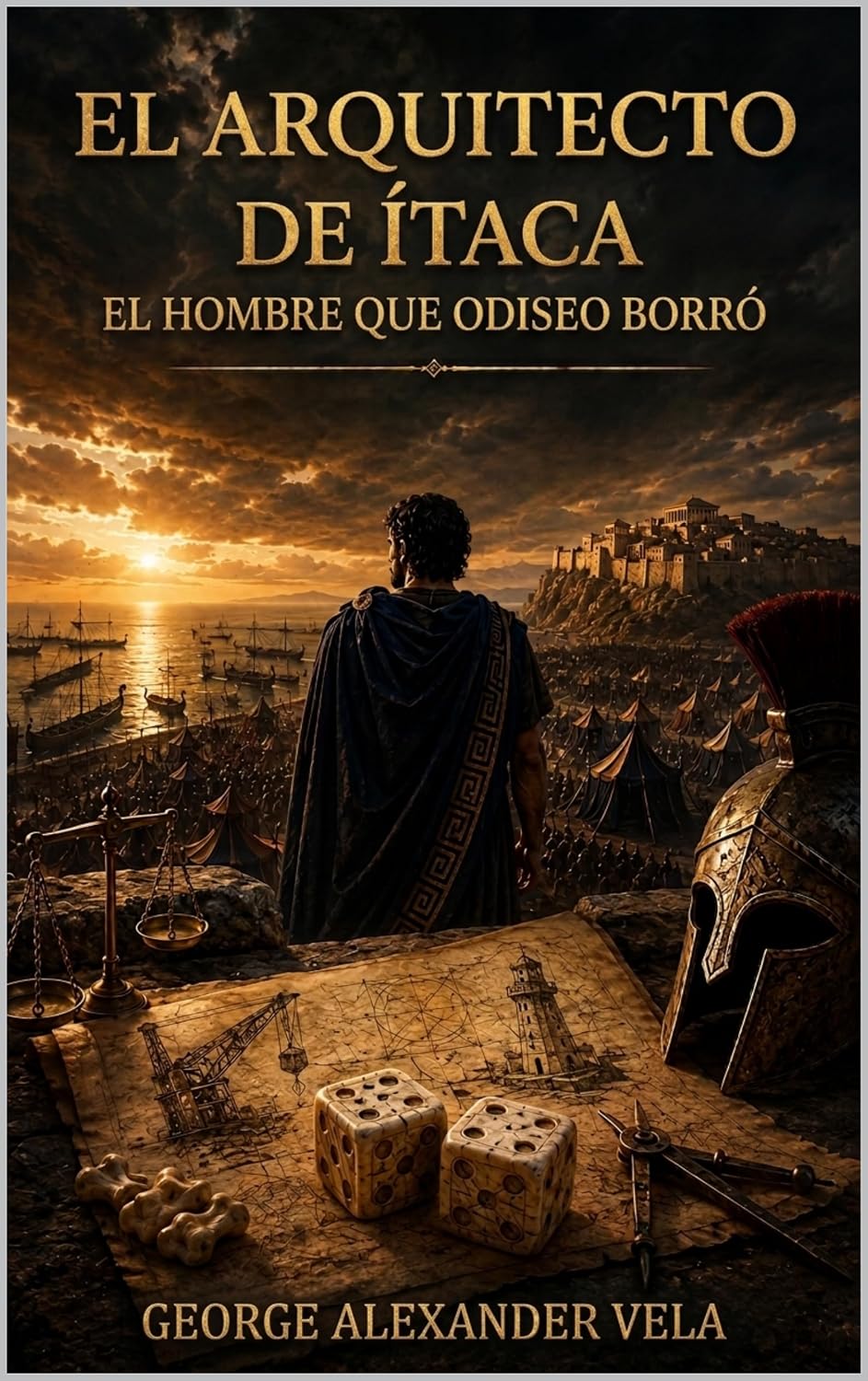
The Architect of Ithaca
The Man Odysseus Erased
Everyone knows Odysseus's story. This is the story of the man he destroyed to keep it. Palamedes of Euboea — inventor of the alphabet the army counts with, the lighthouses it sails by, and the dice that keep it sane — makes one mistake: he drags Odysseus, feigning madness behind a plough, into the war he tried to escape.
Nine years later comes a forged letter, a rigged trial, a pit of stones — and a poem that never once says his name. The Architect of Ithaca is the story the Odyssey could not afford to tell.
Trojan War Cycle
Literary Mythology
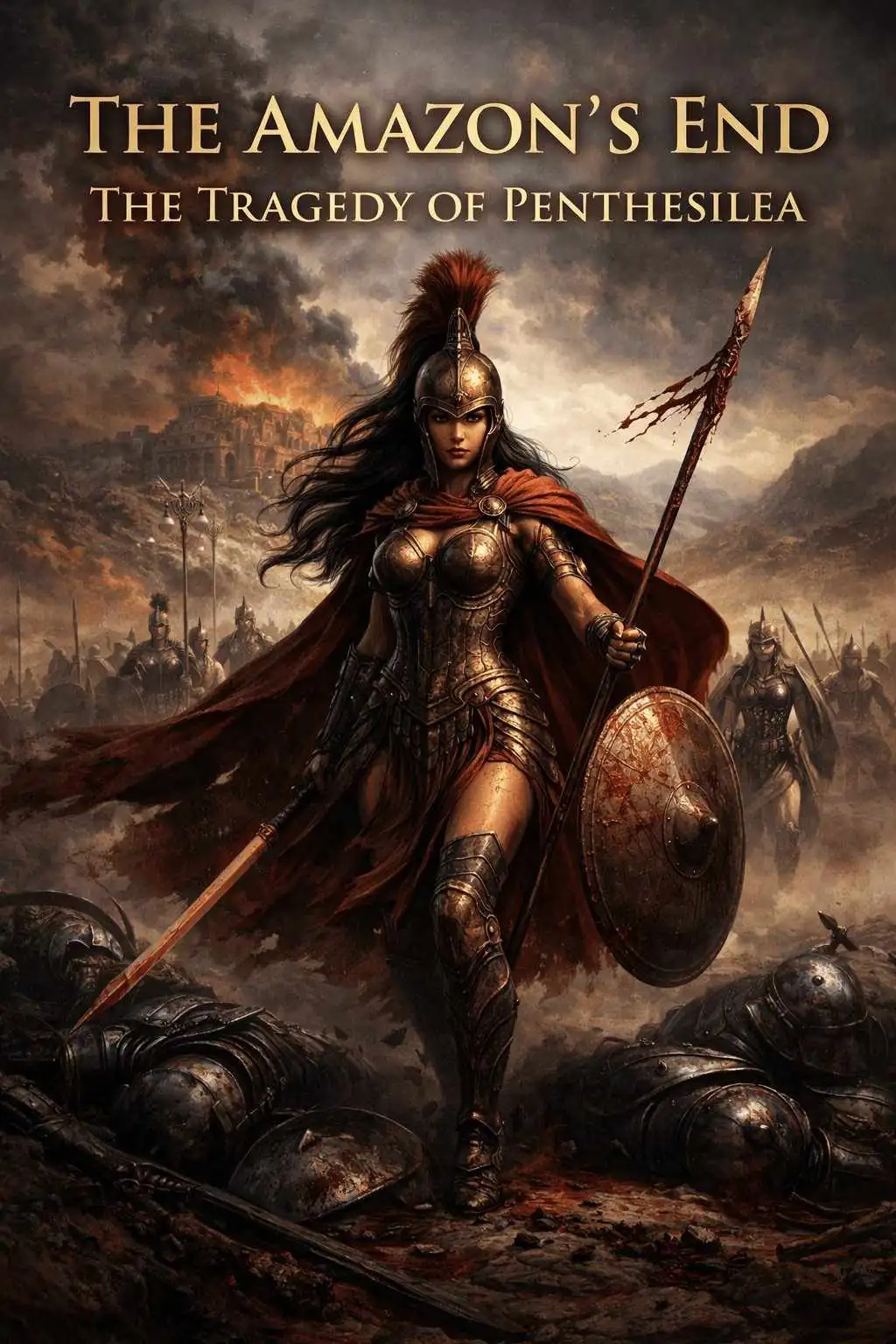
The Amazon's End
The Tragedy of Penthesilea
The war had been running for ten years when Penthesilea, War-Queen of the Amazons, brought her twelve best warriors to the walls of Troy. She came because she owed a blood-debt. She came because she believed in something. She came because she was the last great queen of a people the world was in the process of forgetting, and this was the last great war, and there would not be another opportunity like it.
The Greeks had Achilles. Troy had its walls. Penthesilea had twelve women and a cause that history would later struggle to remember clearly. The narrator has opinions about this.
Drawing on the Aethiopis of Arctinus of Miletus and Quintus of Smyrna's Posthomerica, The Amazon's End follows Penthesilea from Themiscyra to the Scaean Gate in the voice that has carried this series from the beginning — present, wry, and constitutionally unable to let a legend pass without noting what the poets left out.
"She came to Troy to die well. History would decide whether she had managed it."
Trojan War Cycle
Literary Mythology
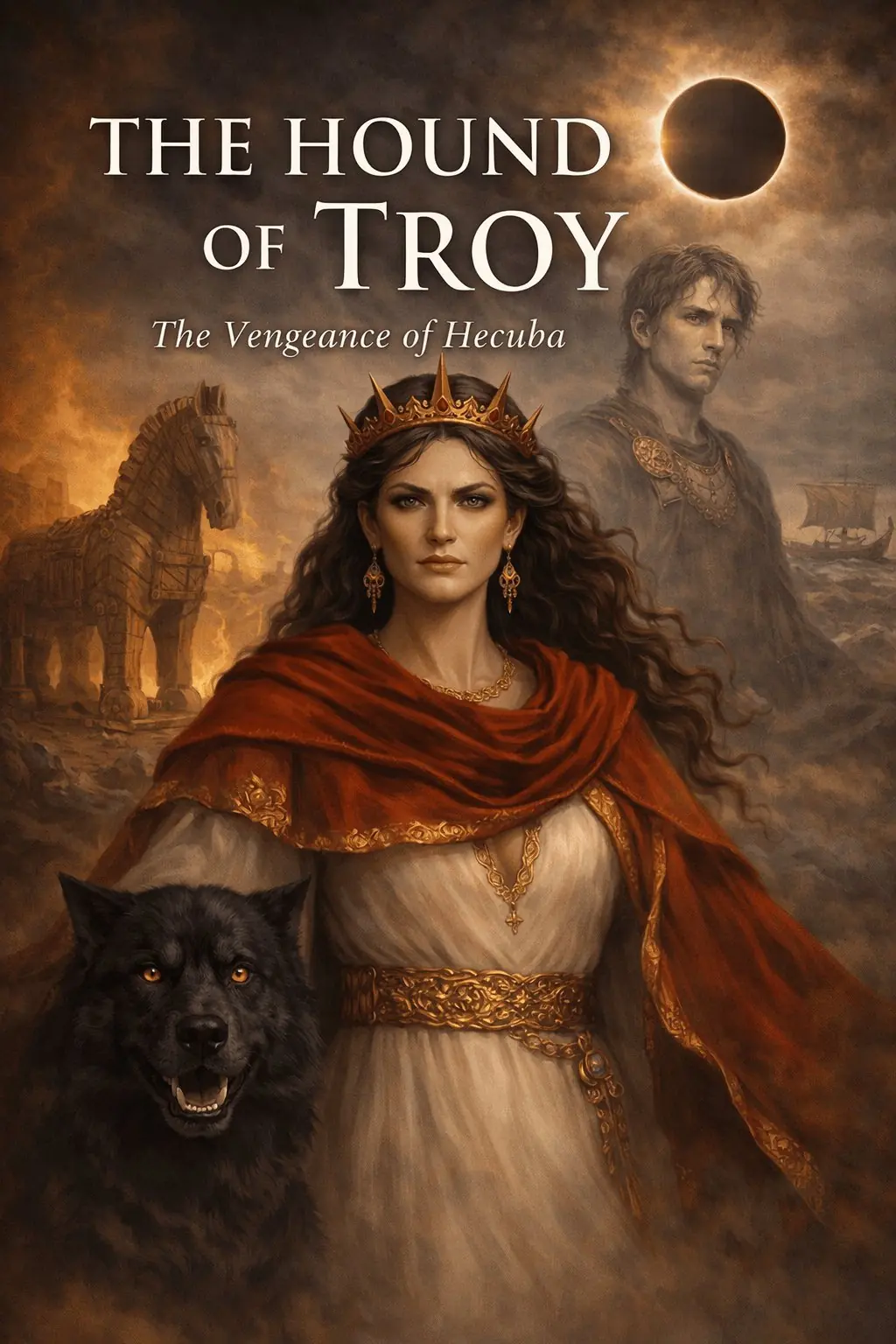
The Hound of Troy
The Vengeance of Hecuba
Hecuba was fifty-two years old, Queen of Troy, mother of nineteen children, and the most competent person in any room she entered. Then the war ended, and everything she had built — and everyone she had loved — was taken from her in the space of a single night.
What the myth remembers is what came after: the discovery of her youngest son's body on a Thracian shore, the vengeance in the tent, the blinding of a king, and the transformation on the headland at Cynossema — the place that the sailors would call the Dog's Tomb for centuries after, without knowing why. The Hound of Troy is an account of how a woman who never showed emotion in public arrived at the point where there was nothing left to show.
"From supreme queen to slave. They took everything, so she took their eyes."
The Theban Cycle
Two books
Theban Cycle
Literary Mythology
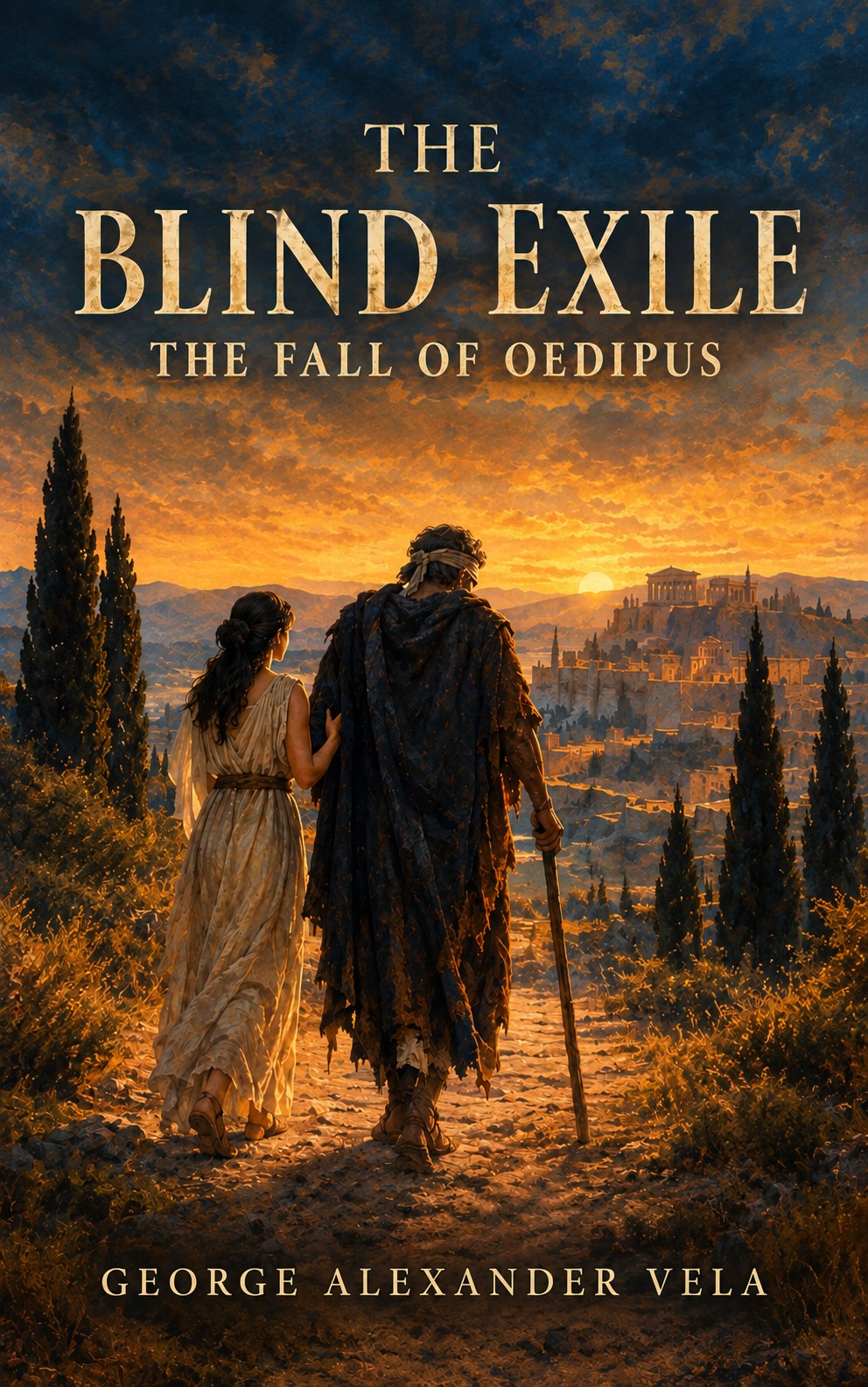
The Blind Exile
The Fall of Oedipus
He solves the only case in Greek myth where the detective is the criminal — and does not find out until the whole city is watching.
Oedipus is the cleverest man in Thebes: the one man who answered the Sphinx's riddle and lifted the plague she left behind. He also, in the process of hunting down the source of a second plague years later, discovers that the murderer he has sworn to exile is himself. What follows is not the end of the story — only the end of the part everyone already knows.
The Blind Exile follows Oedipus past the closing curtain of Sophocles' most famous play: the long walk out of Thebes, the daughter who becomes his eyes, and the strange, difficult peace he finds at Colonus, where even the gods seem willing, for once, to let a broken man rest.
Theban Cycle
Literary Mythology
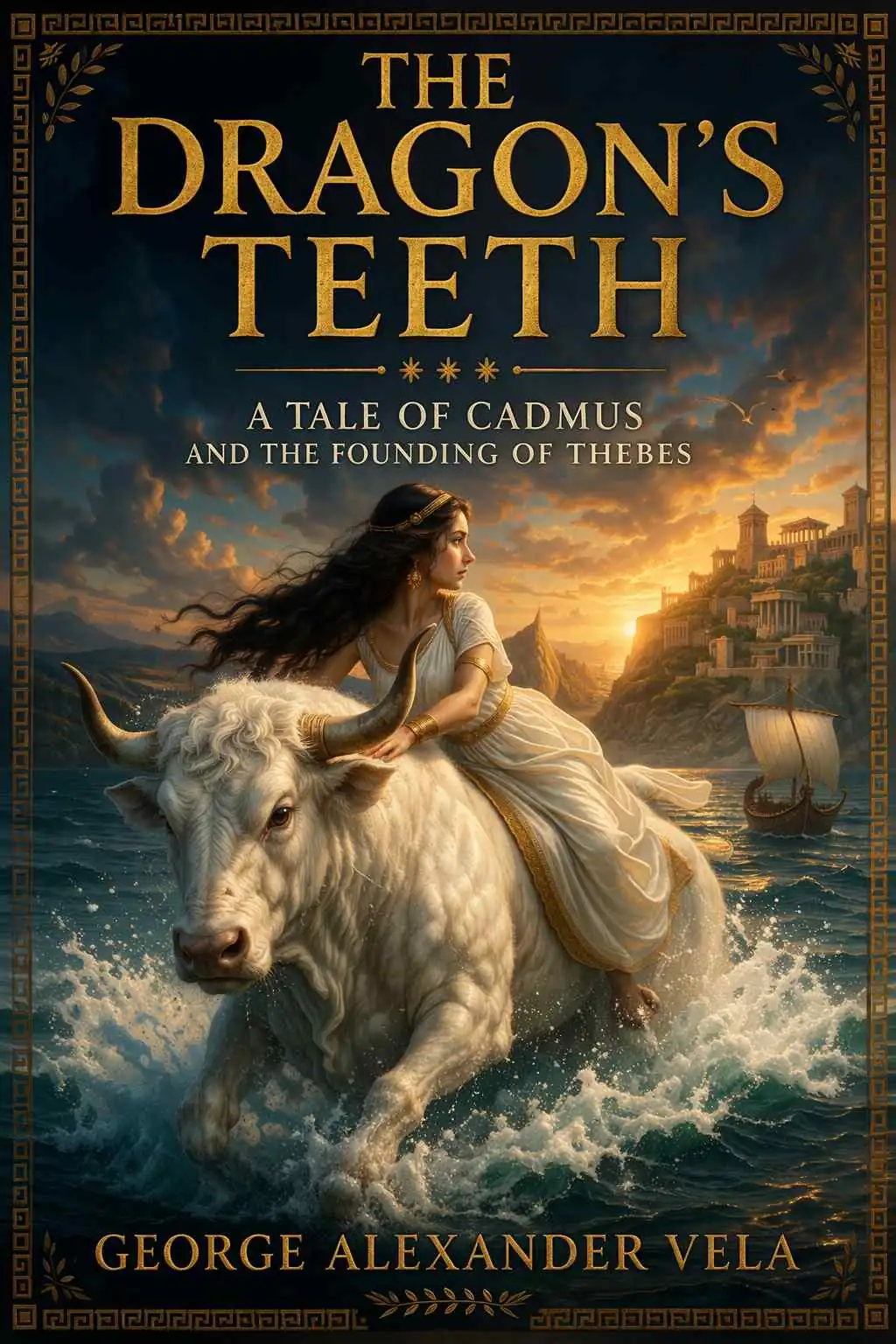
The Dragon's Teeth
A Tale of Cadmus and the Founding of Thebes
Before Oedipus, before Antigone, before the Theban wars — there was Cadmus. He came from Phoenicia searching for his sister Europa — taken by Zeus in the form of a white bull — and, on the oracle's instruction, followed a cow to the spot where he would found Thebes: a place of a spring, a dragon, and a field that needed sowing.
The Dragon's Teeth is the founding myth of Thebes — the story of how a city is built, what it costs, and why the ground it stands on has always been cursed.
Heroes & Journeys
Four books
Heroes & Journeys
Literary Mythology
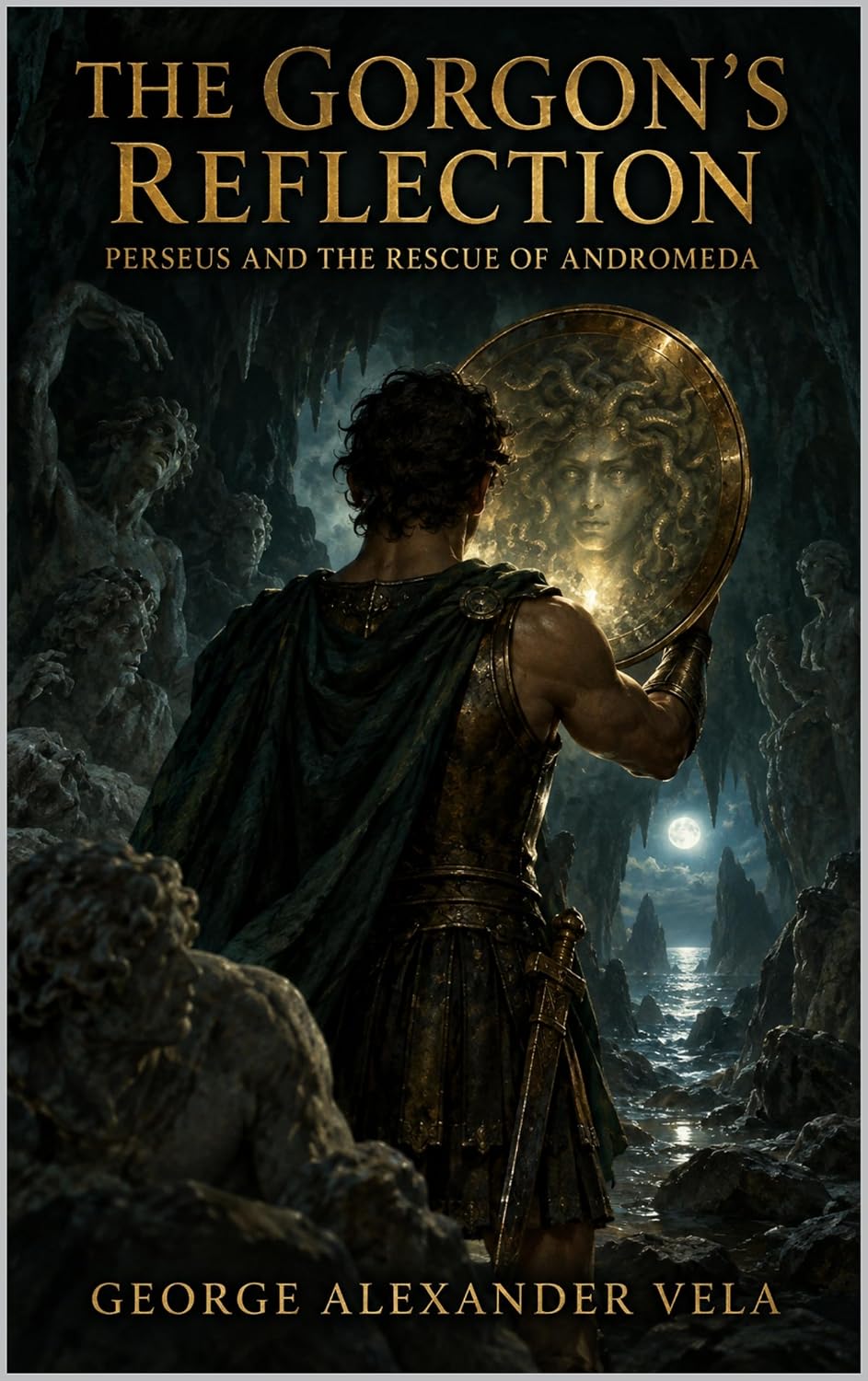
The Gorgon's Reflection
Perseus and the Rescue of Andromeda
His grandfather locked his mother in a bronze chamber to cheat a prophecy. The sea delivered them both to a fisherman's island in a wooden chest instead. When a king wanted the mother badly enough to invent an impossible errand, the boy from the chest stood up at a banquet and promised to bring back the head of Medusa. Everyone laughed. That was their first mistake.
Perseus has no ship, no army, and no idea where the Gorgon sleeps — only a temper he inherited from a god he has never met, and, eventually, help: a mirror-bright shield, winged sandals, a cap of darkness, and directions extracted from three sisters who share one eye between them and give up nothing for free.
What follows is the strangest quest in Greek myth: a monster who kills with a glance and can only be fought backwards, in a reflection; a princess chained to a rock as the tide comes in; a wedding that turns into a war; and a homecoming where the impossible errand comes full circle — because the head in the bag still works, and the king who sent him is still smiling.
Heroes & Journeys
Literary Mythology
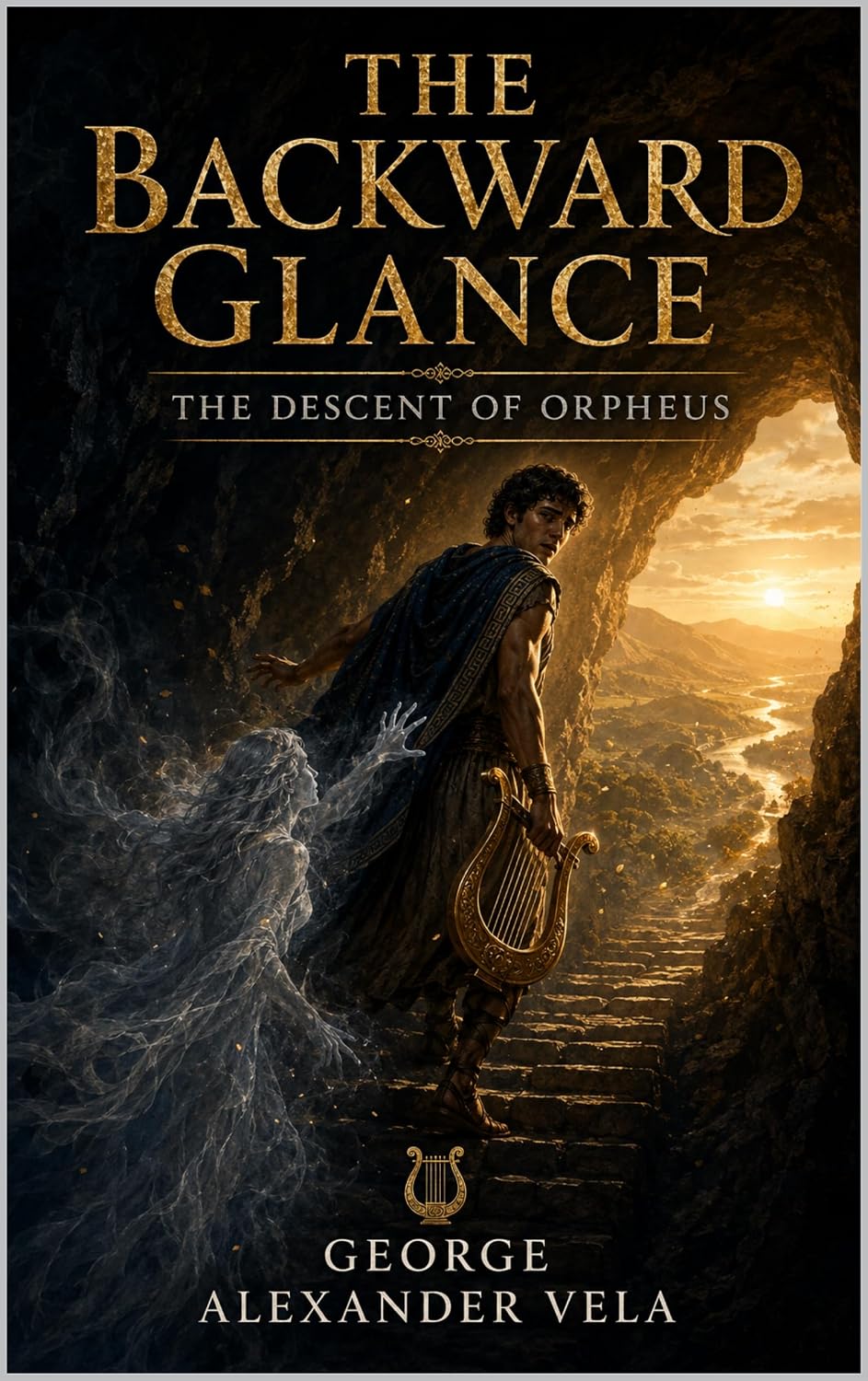
The Backward Glance
The Descent of Orpheus
He could charm stone, silence rivers, and make the lord of the dead weep. The one thing he could not do was walk twenty more steps without looking back.
Orpheus is the greatest musician the world has ever known — a man whose songs can bend nature itself. Eurydice is the one person who hears the man beneath the music. Their marriage lasts long enough for one summer, one temple, one absent-minded kiss placed like a flower in a vase. Then a viper in the grass takes her, and Orpheus does what no living man has dared: he walks down into the underworld, lyre in hand, to sing her back from the dead.
The ferryman weeps. Cerberus lies down like a farm dog. The Furies stop mid-torment to listen. What follows is the most famous walk in Greek myth, told step by step, doubt by doubt — and after it, the grief, the wandering, and the head that would not stop singing.
Heroes & Journeys
Literary Mythology
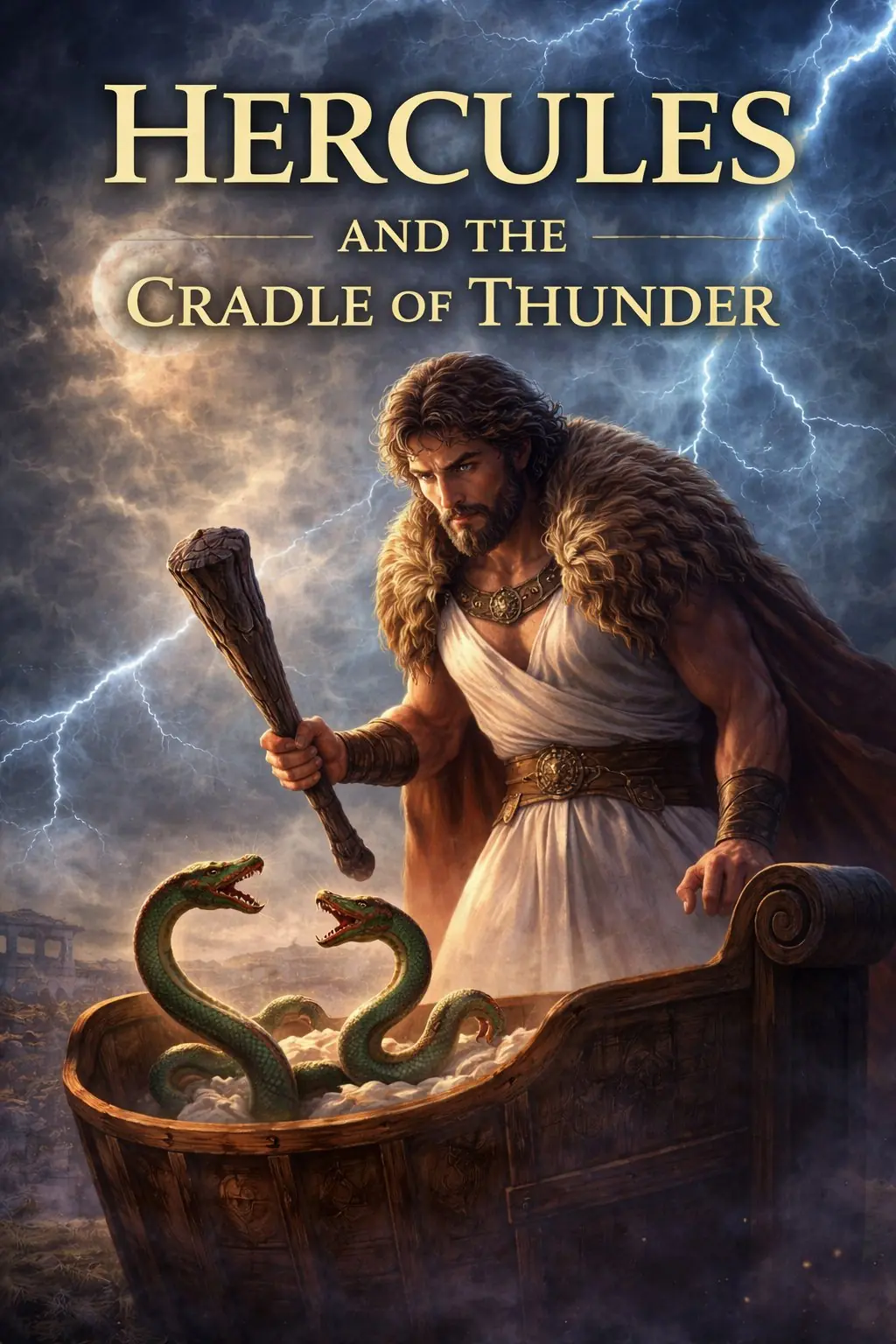
Hercules and the Cradle of Thunder
The myth of Heracles is the most famous in the Greek canon, which is precisely why it needs to be read carefully. The twelve labours are well known. What is less well known is what the labours were for — and what it costs a man to be remade, task by task, into the thing a god requires.
Hercules and the Cradle of Thunder follows the greatest hero of the ancient world from Thebes to the pyre on Mount Oeta, in a voice that has no particular interest in celebrating the legend at the expense of the person inside it.
Heroes & Journeys
Literary Mythology
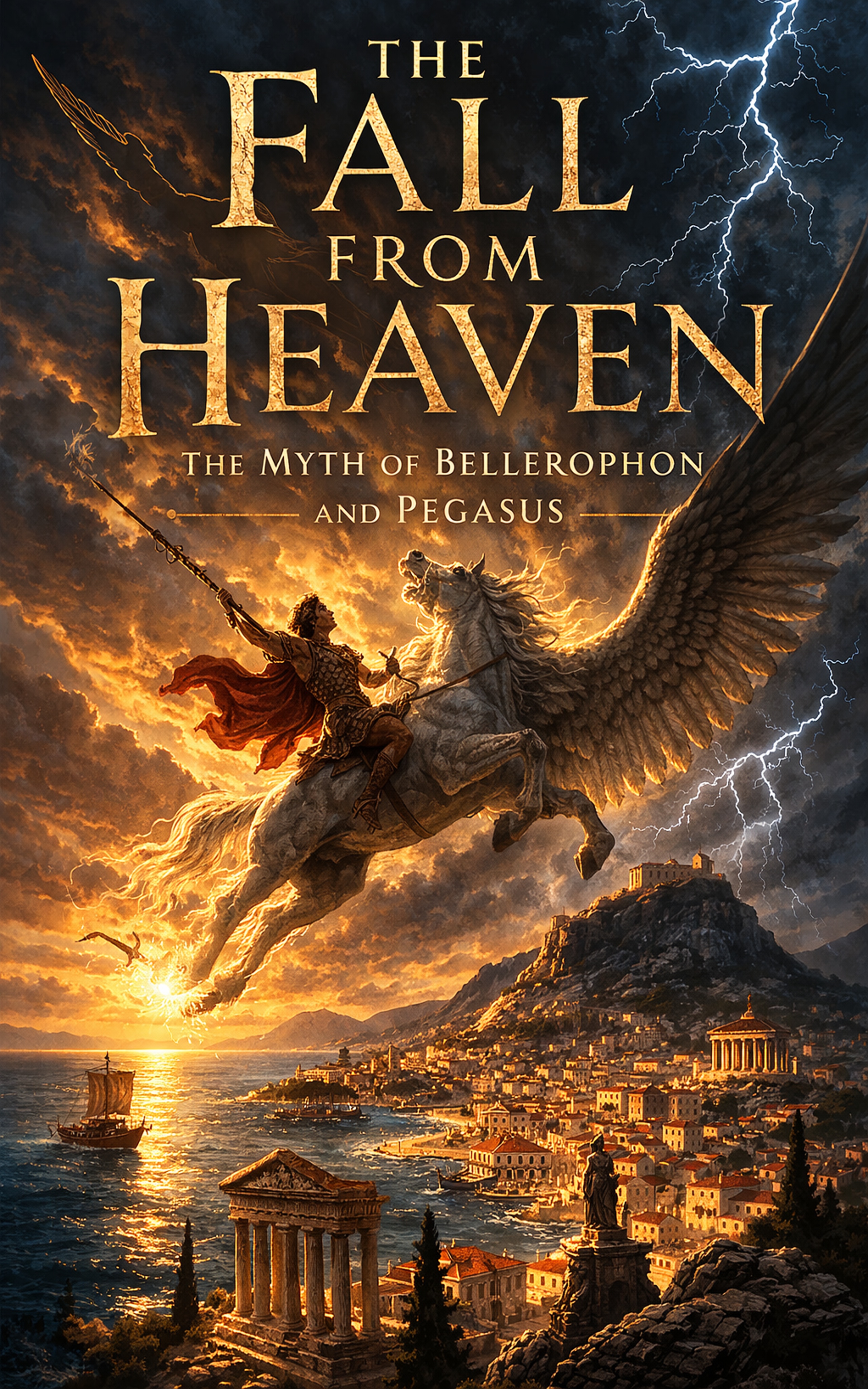
The Fall from Heaven
The Myth of Bellerophon and Pegasus
Bellerophon tamed Pegasus, killed the Chimera, survived the Amazons, and defeated the Solymi — and then, at the height of his fame, attempted to ride a winged horse to Mount Olympus to take his place among the gods. The gods were not expecting him. They were also not pleased.
The myth of Bellerophon is the myth of the overreacher — the man who won everything and lost it by wanting more. The Fall from Heaven is its retelling: a story about the distance between what the gods promise and what they deliver, and about what Corinth looked like from the perspective of a man who could not stop looking up.
Where this series begins.