Who She Was
Harmonia was the daughter of Ares, god of war, and Aphrodite, goddess of love. She came out of the affair between them. Hephaestus, Aphrodite's husband, once caught the pair in an invisible net and put them on display for the whole pantheon to see. (They came. They stared. Nobody left early.) The affair went on regardless. Harmonia was one of its results.
That parentage does real work. Thebes will be a city built on violence and devotion in roughly equal measure, and its founder's wife carries both parents' blood into the bargain—about as good a résumé as any newlywed ever had. Harmonia is not a footnote to the Cadmus story—she's arguably the point of it: the prize that justified the eight years of service, the dragon, and the men who grew from its teeth.
The Wedding All the Gods Attended
When Cadmus finished his eight years of service to Ares and was granted the throne of Boeotia, Zeus arranged the marriage himself. The wedding took place on the Theban acropolis, the first great public event the new city ever held. Every Olympian god showed up in person, gifts in hand. This is one of exactly two mortal weddings in Greek myth the gods attended themselves rather than sending their regrets. The other was Peleus and Thetis—the wedding where an uninvited goddess tossed a golden apple onto the table and started the Trojan War. (The gods, it turns out, are terrible about guest lists.)
The Muses sang. Apollo played. Hephaestus, who had his own complicated history with Harmonia's parents, gave her a necklace of extraordinary beauty—the same necklace that would go on to earn a reputation as the most cursed object in Theban history. Not every wedding gift ages well.
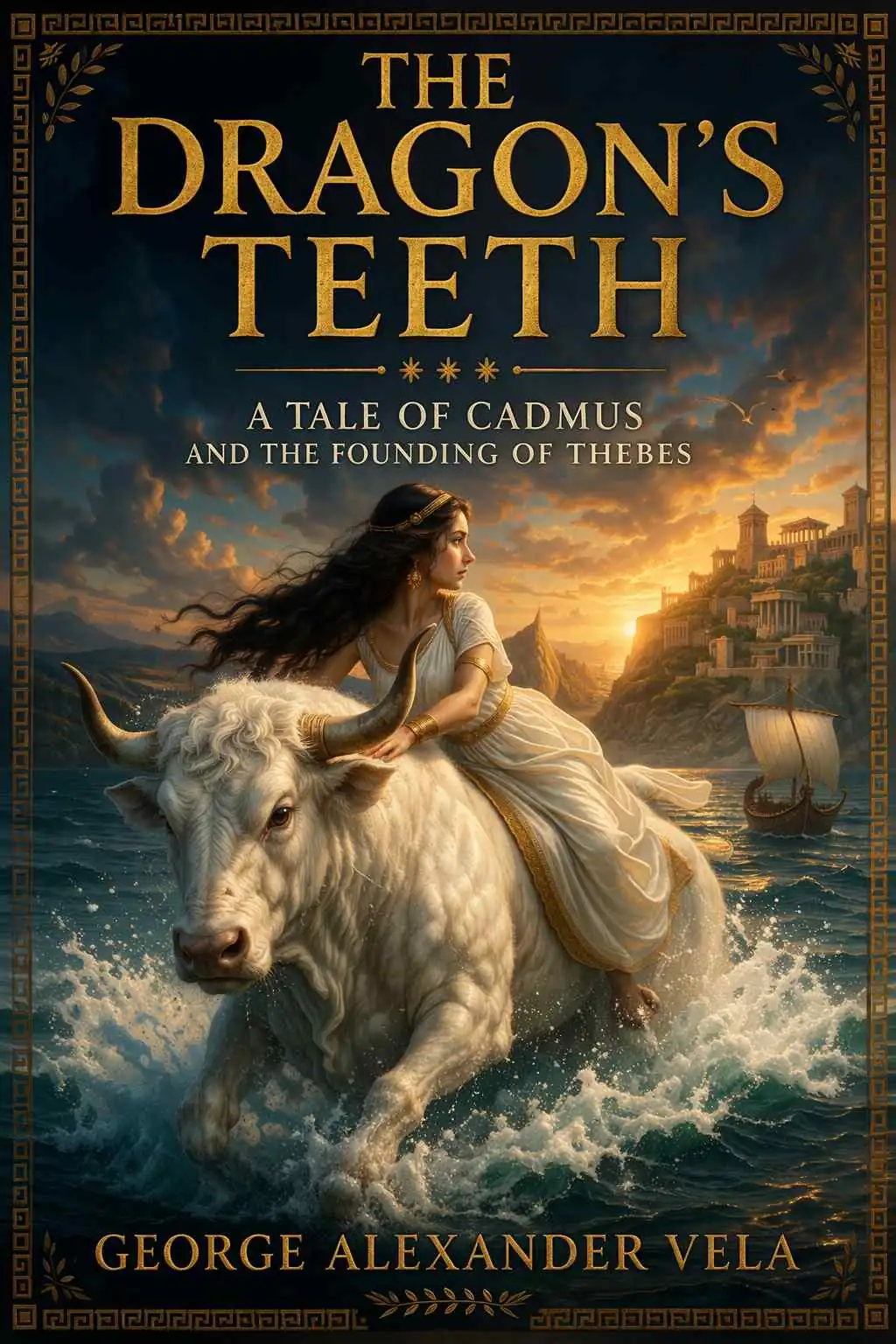 Cadmus, the serpent, and the city grown from its teeth. That’s my novel The Dragon's Teeth. Read it on Amazon →
What the Marriage Bought Thebes
A mortal king marrying a goddess wasn't unheard of in Greek myth, but it was rare enough to matter. It gave Thebes something few young cities could claim: a bloodline that ran straight to Olympus, through Harmonia to both Ares and Aphrodite. Their children arrived fast—Agave, Semele, Ino, Autonoe, Polydorus—and nearly every one of them anchors a major Theban tragedy. Semele mothered Dionysus; Agave mothered Pentheus. The family Olympus blessed at the wedding spent the next two generations tearing itself apart.
Cadmus and Harmonia's story doesn't end in the city. In old age, worn down by watching their descendants destroy themselves—Pentheus torn apart by his own mother, Actaeon torn apart by his own hounds—Cadmus says something the poets don't let many mortals say out loud. If the gods love a serpent's life so much, he says, let him have one. He gets his wish, and so does Harmonia. Both of them turn into snakes and are carried off together to the Isles of the Blessed. The myth doesn't end with death. It ends with the man who killed a sacred dragon quietly turning into one.
The Dragon's Teeth
Book Five of the Myths of the Ancient World series. The myth of Cadmus, Harmonia, and the city they built together.
Also on the blog: