Were Achilles and Patroclus Lovers?
Homer's own word for it is hetairos — companion. In the Greek heroic tradition that word carries real weight: it means fighting side by side, eating together, sharing a tent, sharing everything. It does not, on its own, settle what "everything" includes. The ancient world argued about it anyway. Plato's Symposium debates directly whether Achilles or Patroclus was the lover and which was the beloved. Aeschylus wrote a full tragedy on the question. None of this was scandalous to raise — it was treated as a serious inquiry into the nature of love, which is a different kind of respect than old poems usually get. (Try raising the question at a modern faculty dinner and watch the room's temperature drop ten degrees.) Two and a half thousand years later, nobody has settled it — which says less about the ancient sources than about how well Homer built the silence in the first place.
This is that scene, in full. When word reaches Achilles that Patroclus is dead, Homer gives him grief so violent it breaks the surface of the poem like a fault rupture. He falls in the dust and tears at his own hair. The servant women scream, because they think their king has died too. His mother Thetis hears the cry from the floor of the sea and comes up to find out why. Nowhere else in the Iliad does the poem treat the death of a comrade this way. The word for what Achilles and Patroclus are to each other never arrives. The grief, unmistakably, is the definition.
The details of that ancient argument are worth having, because they're stranger than the summary suggests. Phaedrus, in the Symposium, argues that Achilles was the beloved — younger, still beardless, more beautiful — and that his choice to die avenging Patroclus made his devotion the deeper one, since a beloved isn't supposed to die for anyone. Aeschylus, in a lost tragedy called The Myrmidons, appears to argue the opposite. The surviving fragments have Achilles addressing Patroclus's corpse and mourning what he calls the sacred companionship of their thighs — language that answers one question by raising three others (no translator has ever rendered that phrase comfortably). None of this reads as scandal in the sources. It reads as scholarship.
What Homer Actually Wrote
Start with what's actually on the page, since the poem gets cited constantly by people who haven't counted the lines. Achilles and Patroclus share a tent. In Book Nine, when the Greek envoys come to beg Achilles back into the war, Patroclus is right there — preparing food, serving it, sitting nearby while the men negotiate. Achilles plays the lyre; Patroclus listens. When Patroclus dies, his ghost visits Achilles in a dream. He asks to be buried quickly, so he can cross into the underworld, then asks for one more thing: that their bones be mingled together in the same urn. "We grew up together," the ghost says, more or less. "Bury us together." Achilles agrees immediately — no hesitation, no debate. This will happen; they will share the urn. Homer states it once and moves on. (For a poem this long, that's practically a shrug.)
What Homer does not write is explicit desire — for Achilles and Patroclus, or for any other male pair in the poem. The Iliad, as a rule, isn't interested in the intimate interior of a relationship. It shows the consequences of connection, not the connection itself. So look at the consequences. The entire second half of the poem is Achilles's response to Patroclus's absence. The wrath in the poem's first line was aimed at Agamemnon; by the end it has become a different wrath entirely, aimed at Hector, aimed at himself, aimed at the plain fact of death. Agamemnon's apology couldn't move him. Odysseus's eloquence couldn't move him. One death did. That is what the whole poem has been building toward. Take Patroclus out of the Iliad and there is no Achilles left to write about. Call it whatever word you want. It isn't just friendship. It's architecture.
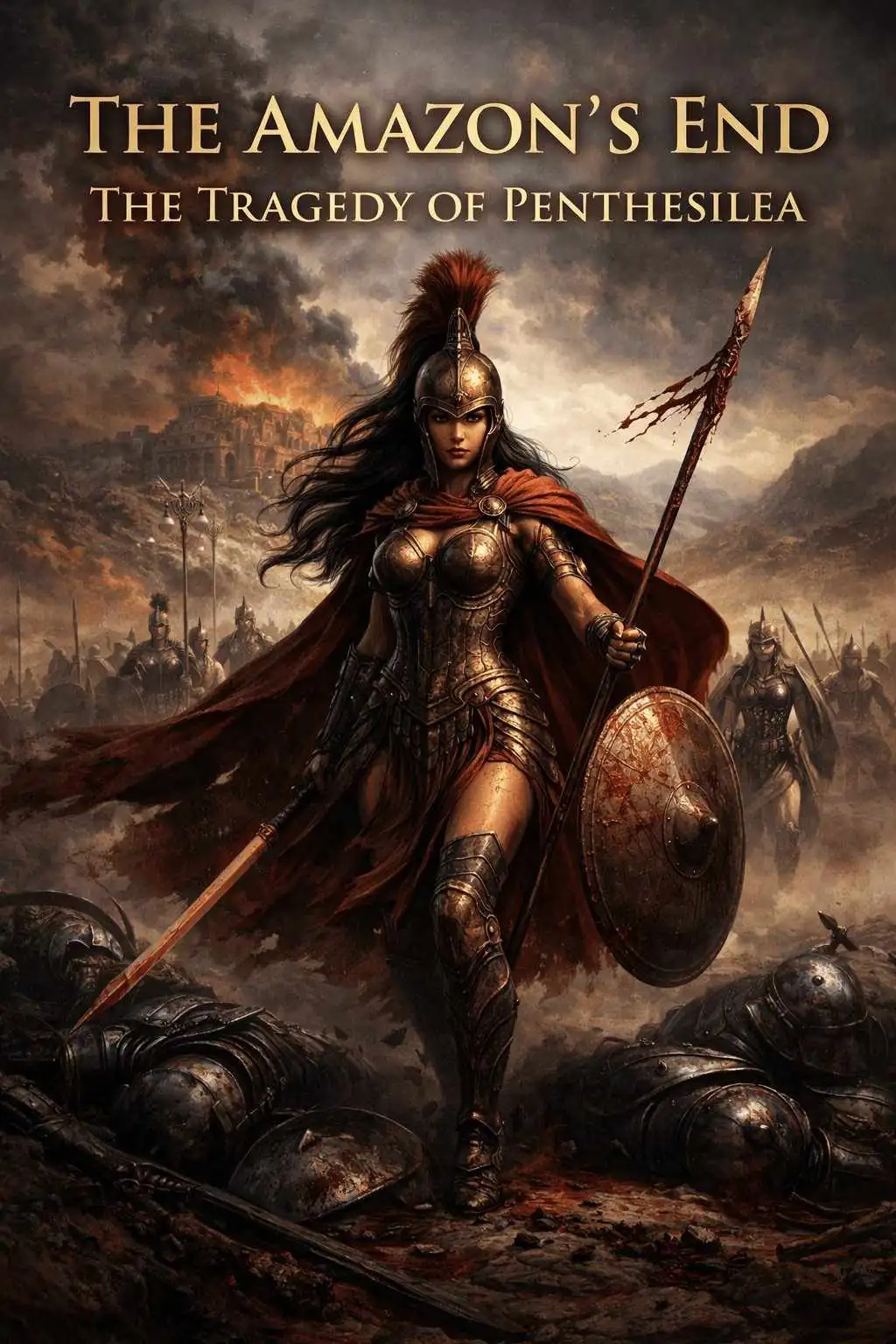 The war seen from the losing side, and the women written out of it. That’s my novel The Amazon's End. Read it on Amazon →
The Grief That Drives the War's Ending
Achilles's return to battle after Patroclus's death is not heroic in any usual sense. It isn't about Troy, or the Greeks, or honor as the word is normally used. It's about Hector — specifically Hector, who killed Patroclus — and about closing an account that has nothing to do with the war's official cause. When Achilles arms for the second time, he knows his own death is coming with it. His new armor, forged by Hephaestus after Hector stripped the old set off Patroclus's corpse, is the most beautiful object in the poem — and also the most temporary. He will wear it, kill Hector, and be killed in turn — and he knows all three of those things before he puts it on. He goes anyway. The alternative is letting Hector keep breathing, and that option was never on the table for him.
The debate didn't stop with the Symposium. Plato comes back to the question again, briefly, in the Phaedrus. Pindar mentions it too, and nobody in antiquity treated the question as settled — or as beneath asking (a courtesy modern arguments about the Iliad don't always extend it).
And later tradition went further than argument: it decided where the two of them end up. Achilles, in the myths that grew up after Homer, doesn't just die at Troy — he is carried off to the White Island, out in the Black Sea, to live on among the other dead heroes forever. Some versions of that story put Patroclus there too, beside him, permanently. Homer never told us what to call the two of them in life. Whoever added that island didn't feel the need to ask.
The Amazon's End: The Tragedy of Penthesilea
Book Four of the Myths of the Ancient World series. Achilles at the end of the war — after Patroclus, after Hector, in the moment before his own death — and the Amazon queen who came to Troy to face him.
Also on the blog: